Rame Head
The Salt PathRame Head is a turning point on the coastal walk: a headland of exposed slopes and fierce crosswinds where the walkers encounter a long-established community of cliffside shacks. Its landscape gives the narrative a view of homelessness that is both intimate and historical. Here, makeshift shelters are not simply temporary refuges; they are homes passed down through families, secured through a successful challenge to the council, and increasingly caught up in the conversion of coastal space to holiday use.
Coastal setting and the journey
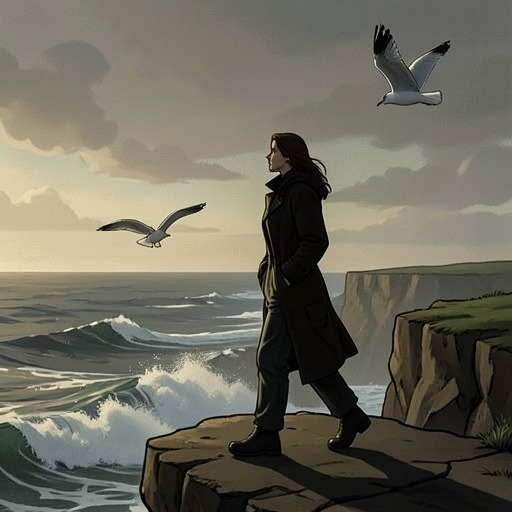
At Rame Head, wind rises from the sea on both sides of the headland, meets above the walkers, and sends gulls spinning before driving them away. White cloud races across the sky; beyond the steep hillside, Whitsand Bay stretches into view. The slopes are covered with bracken, blackthorn, and gorse, and sheds and chalets appear intermittently along the cliff, perched on platforms cut into the hillside. Their scattered arrangement is unlike anything the walkers have seen elsewhere on the path.
The encounter comes after the walkers have left Plymouth and returned to Cornwall. Devon is behind them, and Polruan, the finish line they are approaching, is only a few days’ walk away. The tent has been battered by the wind around Penlee Point and Plymouth Sound; its poles are encased in duct tape. Against that precarious shelter, the Rame Head shacks register as a different kind of settlement: structures rooted in particular plots, with a history and continuity that the walkers’ exposed, mobile life lacks. The passage holds both states together. The cliff dwellings offer evidence of people making a place to stay, while the walkers remain on the move, close to the end of their journey but not yet settled.
The shacks and their history
An old man walking through the thorn trees explains the origins of the plots. Between the wars, a local farmer rented them for nominal sums. People cut platforms into the cliff and put up tents and shacks. After the Second World War, people whose homes had been destroyed in the bombing of Plymouth also came there. The old man’s own family arrived in that period and stayed. Over generations, residents added to and stabilized their dwellings, turning makeshift shelter into an inherited home.
The history complicates any simple distinction between a house and a temporary camp. The shacks began as light structures on rented land, but their significance grew through prolonged use, improvement, and family continuity. The narrative does not describe them as an isolated curiosity: they embody a response to housing loss, first among people making use of inexpensive plots and then among families displaced by wartime bombing. At Rame Head, a shelter can begin as a tent or shack and become a place of belonging without becoming a conventional house.
Tenure, change, and belonging
The land now belongs to the council. The residents were once threatened with removal, but won the right to remain. That history gives the settlement a measure of security while also showing that its residents’ claim to stay was contested rather than automatic. The rent has since risen substantially. The old man observes that nearly all the shacks are now holiday homes, as is the case in many places. The sequence—from inexpensive plots to established family homes, attempted eviction, legal victory, higher rent, and holiday-home conversion—makes the headland a record of changing access to coastal land.
The walkers’ conversation about the shacks opens onto a broader question of whose housing need is recognized. The people who settled there after losing homes in the bombing could be understood through a visible crisis; the book contrasts that history with contemporary homelessness, which is often treated as less deserving of sympathy. It notes that 280,000 households in the UK had claimed to be homeless or at risk of homelessness in 2013, while official rough-sleeping counts captured only a narrower and inconsistent part of the problem. Rame Head gives that argument a physical setting: the cliff shelters make visible the kinds of homes and histories that a single category of homelessness can obscure.
Narrative significance
Rame Head is more than a scenic stretch near the end of the walk. The wind, the precarious tent, and the shacks draw together the book’s recurring contrast between movement chosen as a way to retain control and movement imposed by the loss of secure housing. On the headland, the walkers can pause, look at a settlement shaped by earlier displacement, and hear directly from someone whose family made a home there. Their encounter does not equate their circumstances with those of the families who came after the bombing; instead, it places different experiences of homelessness and shelter beside one another.
The location also shifts the meaning of permanence. The old man’s family stayed because they had made a life on the plots, and the residents successfully resisted being forced out. Yet even this rooted community faces rising rents and a landscape increasingly occupied by holiday homes. Meanwhile, the walkers have only days remaining before Polruan and a new life, but no fixed home is secured by reaching the end of the path. Rame Head therefore holds the journey’s hope and uncertainty in a single landscape: a place where people have built lasting homes from precarious beginnings, and where the right to remain continues to depend on changing economic and public claims to the coast.